
Illumination Designed for Code and Function
Commercial Lighting Installation & Upgrades in Fredericksburg for office, retail, and church properties requiring energy-efficient layouts and inspection sign-off
Lighting systems in commercial spaces must satisfy multiple requirements simultaneously: sufficient illumination for tasks, energy codes that limit wattage per square foot, emergency egress visibility, and fixture placement that passes inspection. Baylor Electric LLC designs and installs lighting from initial load calculations through permit coordination and final sign-off, working across Fredericksburg office buildings, retail spaces, and churches where fixture selection and circuit planning determine both functionality and operating cost. The process begins with interpreting architect plans or developing layouts for retrofit projects, calculating electrical loads, selecting OEM fixture components, and routing conduit to deliver power where ceiling designs and structural elements allow.
Load calculations ensure the existing panel can support added lighting circuits, or identify when service upgrades are required before installation begins. Fixture selection balances light output requirements with energy efficiency mandates, choosing LED components that provide adequate lumens per watt while meeting color temperature specifications for the space. Conduit routing navigates ceiling structures, HVAC ductwork, and sprinkler systems, and circuit planning groups fixtures logically to allow zoned control and minimize wire runs.
Schedule a lighting consultation to review your property's current layout and determine fixture requirements that satisfy both code and functional needs.
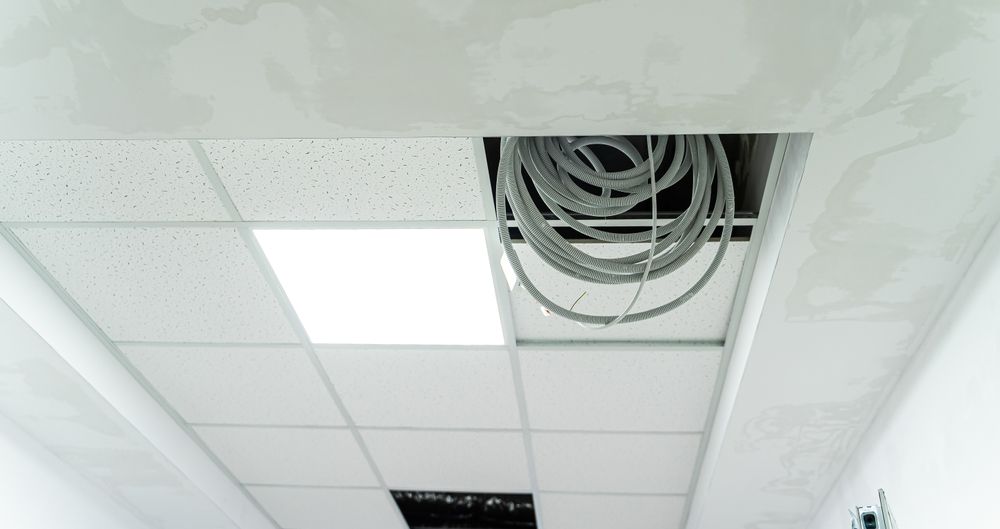
What Separates Code-Current Lighting from Outdated Installations
Current energy codes limit lighting power density—the total wattage allowed per square foot—forcing designers to achieve required illumination with fewer watts through efficient fixtures and strategic placement. Older installations often use outdated fluorescent or incandescent fixtures that exceed current limits, failing inspection when properties undergo tenant build-outs or ownership changes. Code-compliant lighting installations meet energy density limits while maintaining illumination levels specified for each space type, and emergency egress lighting remains independently powered to function during utility failures.
After installation, workspaces achieve consistent illumination without dark corners or glare hotspots, retail displays receive directed light that highlights merchandise, and church sanctuaries balance ambient lighting with accent fixtures for architectural features. Energy-efficient LED fixtures reduce utility costs measurably compared to older systems, and properly zoned circuits allow occupants to adjust lighting for different activities without illuminating unused areas. Inspection sign-offs confirm that fixture placement, circuit protection, and emergency lighting comply with current standards.
Permit handling by Baylor Electric LLC includes submitting installation plans, coordinating inspections after rough-in and final installation, and ensuring fixture specifications match submitted documentation. Property managers avoid violations that delay occupancy or trigger re-inspection fees when permitted work is completed correctly the first time.
Common Questions About Commercial Lighting Projects
Commercial lighting projects involve understanding energy code requirements, coordinating fixture selection with building structure, and managing permit timelines that affect occupancy schedules.
What's involved in lighting design for commercial spaces?
Design begins with calculating illumination requirements for each space type—offices need task lighting at desks, retail requires accent lighting for displays, and warehouses demand high-bay fixtures that reach work surfaces. Load calculations ensure circuits can support planned fixtures, and layouts position lights to avoid glare, shadows, and dark corners while meeting energy code limits for watts per square foot.
How do energy codes affect fixture selection in Fredericksburg commercial properties?
Energy codes cap total lighting wattage based on building type and square footage, requiring efficient fixtures that produce adequate lumens with fewer watts. LED technology typically satisfies these limits while providing better color rendering and longer lifespan than older fluorescent or metal halide systems, reducing both energy costs and maintenance frequency.
Why does conduit routing matter during lighting installation?
Conduit delivers power from panels to fixtures, navigating structural beams, HVAC ducts, and fire suppression systems in ceiling cavities. Poor routing creates code violations when conduit blocks sprinkler coverage or penetrates fire-rated assemblies incorrectly, and inefficient paths increase material costs and installation time.
What's the difference between retrofit and new construction lighting installation?
Retrofits work within existing ceiling structures and electrical capacity, often requiring creative routing to reach new fixture locations without damaging finishes. New construction allows conduit installation before ceilings close, simplifying routing and reducing labor costs while providing flexibility to position fixtures optimally without structural constraints.
How long does commercial lighting installation take from design to final inspection?
Timelines depend on project scope, fixture lead times, and inspection schedules, ranging from one week for small retrofit projects to several weeks for large new construction installations. Coordinating rough-in inspections before ceiling installation prevents delays, and final inspections verify that completed work matches permitted plans before occupancy begins.
Baylor Electric LLC manages commercial lighting projects from design through inspection across Fredericksburg properties, handling permit coordination to keep projects on schedule. Request a project estimate that includes fixture specifications, circuit planning, and inspection timelines based on your property's specific requirements.